Wooden Board Games: The Ultimate OEM Manufacturing & Buying Guide for Global Brands (2026–2036)
Discover everything about wooden board games, including market trends, manufacturing, safety standards, OEM services, sustainable materials, and sourcing strategies. Learn why Vietnam is becoming a leading destination for wooden board game manufacturing between 2026 and 2036.
Wooden Board Games: The Complete OEM Manufacturing & Buying Guide for Global Brands (2026–2036)
Wooden board games have experienced remarkable growth over the past decade, driven by consumers seeking sustainable, educational, and screen-free entertainment. As families, schools, cafés, and educational institutions increasingly value high-quality wooden products, the demand for premium board games continues to rise across North America, Europe, Australia, and Asia.
For retailers, importers, wholesalers, and startup brands, this trend presents an excellent opportunity to launch or expand product collections through reliable OEM and ODM manufacturing partners.
Whether you are developing a private-label game brand or sourcing products for wholesale distribution, understanding manufacturing quality, safety standards, materials, and market trends is essential for long-term success.
Why Wooden Board Games Continue Growing Worldwide
Unlike plastic alternatives, wooden board games offer a premium experience that appeals to both children and adults.
Several global trends are driving demand:
- Eco-conscious consumer behavior
- Sustainable product purchasing
- Growth of family game nights
- Montessori-inspired learning
- Educational toy expansion
- Gift market growth
- Boutique toy retailers
- Board game cafés
Industry analysts expect educational wooden products to remain one of the fastest-growing toy categories throughout 2026–2036, particularly in developed markets where consumers are willing to invest in durable, environmentally friendly products.
What Are Wooden Board Games?
Wooden board games are tabletop games manufactured primarily from solid wood or engineered wood materials instead of plastic or cardboard.
They are valued for their:
- Premium appearance
- Long lifespan
- Sustainable materials
- Educational benefits
- Superior craftsmanship
Modern wooden board games range from classic family games to advanced strategy games, educational learning systems, and Montessori-inspired activities.
Popular Types of Wooden Board Games
A successful wooden game collection often includes products for different age groups and learning objectives.
Strategy Games
Strategy games encourage:
- Critical thinking
- Decision making
- Planning skills
- Concentration
Popular examples include:
- Chess
- Checkers
- Chinese Checkers
- Mancala
- Four in a Row
These products remain strong sellers in both retail and educational markets.
Educational Board Games
Educational games combine learning with entertainment.
They help children develop:
- Mathematics
- Language skills
- Memory
- Logic
- Pattern recognition
- Problem-solving
Many Montessori-inspired educational games also encourage independent learning and hands-on exploration.
Family Board Games
Family board games continue experiencing renewed popularity because they encourage quality time without screens.
Parents increasingly seek products that support:
- Communication
- Teamwork
- Social interaction
- Emotional development
Wooden versions often command higher retail prices due to their durability and premium appearance.
Montessori Wooden Board Games
Montessori-inspired board games focus on child development through simple, purposeful activities.
These products often include:
- Counting boards
- Alphabet boards
- Number matching games
- Shape recognition
- Color sorting
- Practical life activities
Manufacturers producing Montessori collections can also explore related products such as wooden sensory toys:
Benefits of Wooden Board Games
Superior Durability
Wood offers significantly greater durability compared to cardboard or plastic.
High-quality wooden games can remain in excellent condition for many years, making them ideal for:
- Schools
- Libraries
- Daycare centers
- Family homes
- Board game cafés
This long lifespan also increases perceived product value.
Eco-Friendly Manufacturing
Environmental awareness continues influencing purchasing decisions worldwide.
Consumers increasingly prefer products manufactured from responsibly sourced wood rather than petroleum-based plastics.
Manufacturers using FSC-certified materials can strengthen buyer confidence while supporting sustainable forestry.
Learn more about FSC certification:
Premium Brand Positioning
Wood naturally communicates quality.
Consumers often associate wooden products with:
- Craftsmanship
- Luxury
- Sustainability
- Safety
- Timeless design
This allows retailers to position wooden board games within premium market segments.
Choosing the Right Wood for Wooden Board Games
Material selection plays an important role in product quality, durability, and manufacturing efficiency.
Rubberwood
Rubberwood remains one of the most popular materials because it offers:
- Sustainability
- Smooth grain
- Cost efficiency
- Excellent machining characteristics
It performs well for educational games, puzzle boards, and children’s products.
Beechwood
Beechwood is frequently selected for premium collections.
Advantages include:
- High density
- Excellent strength
- Attractive grain
- Long product lifespan
Beechwood components are commonly used for chess pieces, game tokens, and premium accessories.
Birch Plywood
Birch plywood provides:
- Dimensional stability
- Smooth surfaces
- Precision CNC machining
- Lightweight construction
It works particularly well for flat game boards and educational products.
Manufacturing Process of Wooden Board Games
Professional wooden board game production involves multiple stages to ensure consistent quality.
Product Design
Manufacturing begins with product development.
Design teams create:
- CAD drawings
- 3D models
- Technical specifications
- Packaging concepts
Prototype testing allows manufacturers to refine product functionality before mass production.
Material Selection
Factories carefully select wood based on:
- Moisture content
- Grain consistency
- Structural strength
- Sustainability certifications
Proper material selection reduces defects during production.
CNC Machining
Modern factories use CNC equipment to achieve:
- Precise cutting
- Consistent dimensions
- Efficient production
- Reduced waste
Computer-controlled machining improves product quality while maintaining scalability.
Sanding and Surface Finishing
Every wooden component undergoes careful sanding to eliminate rough edges.
Manufacturers then apply child-safe finishes that:
- Protect wood
- Enhance appearance
- Improve durability
Water-based coatings are increasingly preferred due to lower environmental impact.
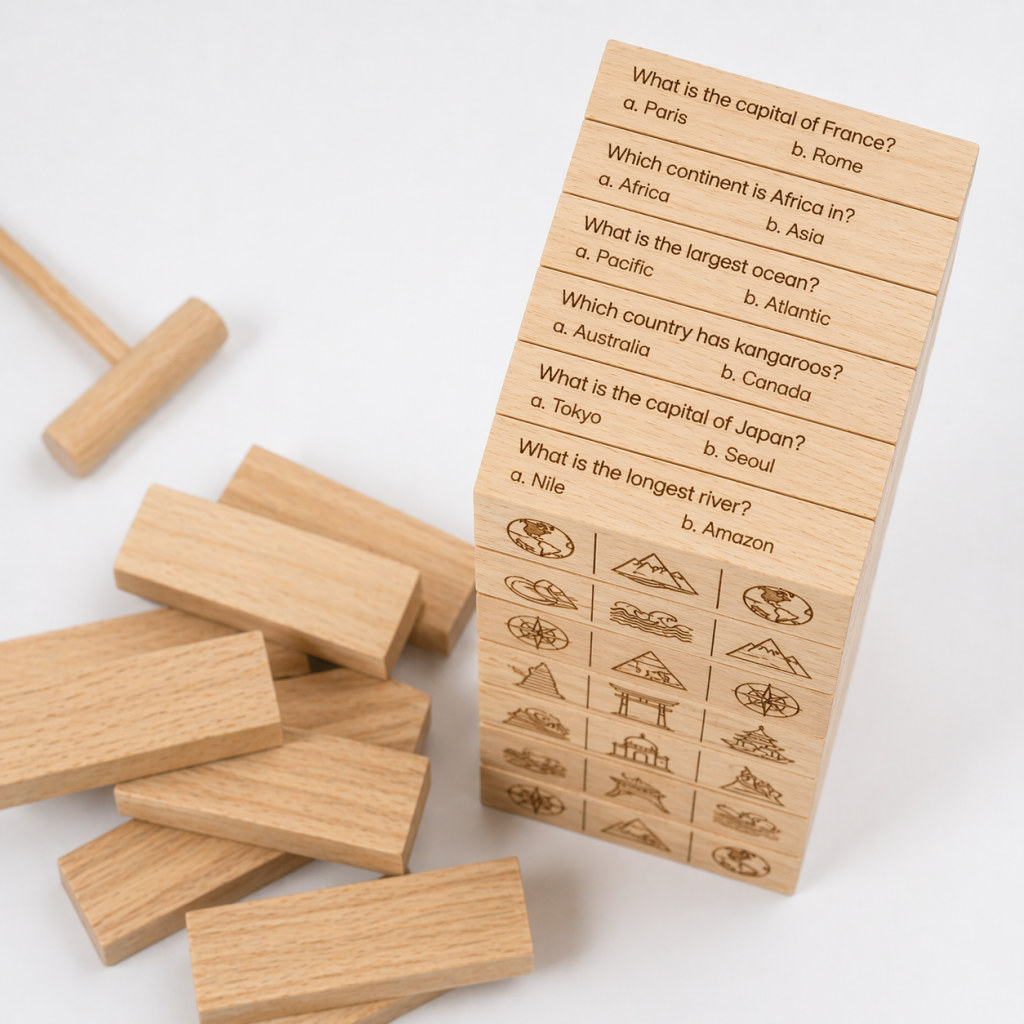
Assembly
Assembly includes:
- Component fitting
- Hardware installation
- Functional testing
- Final inspection
Attention to detail ensures every game functions properly before packaging.
Safety Standards for Wooden Board Games
International buyers require compliance with strict safety regulations.
EN71 Certification
EN71 remains essential for products entering European markets.
Testing evaluates:
- Mechanical safety
- Chemical composition
- Flammability
Compliance increases buyer confidence.
ASTM F963
The United States requires ASTM F963 compliance for children’s products.
Learn more:
This standard evaluates:
- Mechanical hazards
- Material safety
- Product performance
CPSIA Compliance
Manufacturers exporting to the United States should also comply with CPSIA requirements covering:
- Lead content
- Chemical restrictions
- Product testing
- Children’s product regulations
Sustainable Manufacturing Trends (2026–2036)
Sustainability continues reshaping the toy industry.
Leading manufacturers increasingly adopt:
- FSC-certified wood
- Water-based paints
- Plastic-free packaging
- Renewable energy
- Waste reduction programs
Consumers are rewarding brands that demonstrate genuine environmental responsibility.
Why Retailers Choose OEM Manufacturing
OEM manufacturing allows businesses to launch products without investing in factory infrastructure.
Benefits include:
- Lower startup costs
- Faster product development
- Private labeling
- Flexible production
- Professional quality control
Reliable manufacturing partners can also assist with packaging design, logistics, and compliance documentation.
For OEM wooden toy manufacturing services, visit:
Many educational wooden board games are inspired by child-centered learning principles promoted by the American Montessori Society: https://amshq.org